Wildlife conservation doesn't happen in isolation — it thrives when communities, students, and professionals unite with a shared purpose. At Sardar Patel Zoological Park, education isn't just a program; it's the heartbeat of everything we do.
In 2024-25, SPZP welcomed 1,023,981 visitors, conducted 74 keeper talks, led 25 dawn bird-watching walks, and trained 286 veterinary students — transforming the park into western India's most active hub for conservation literacy.
Training the Next Generation of Wildlife Veterinarians
Every week, a new batch of veterinary students from Kamdhenu University arrives at SPZP for intensive one-week internships. These aren't passive observations — they're immersive experiences where students:
- Assist in surgeries — from routine health checks to emergency procedures
- Learn diagnostic imaging — X-rays, ultrasounds, and laboratory analysis
- Practice wildlife medicine — treating everything from big cats to birds
- Study necropsy protocols — understanding animal health through post-mortem examinations
Over the year, 22 batches rotated through the program, gaining real-world skills that textbooks simply can't teach.
Student Testimonial
"Watching a rhino willingly open its mouth for dental care changed how I see veterinary medicine. It's not about dominance — it's about trust."
— Veterinary intern, Kamdhenu University
Zoo Management & Zoology Internships
Beyond veterinary training, SPZP collaborates with:
- Maharaja Sayajirao University, Baroda — 19-day zoology summer internships
- Gujarat University — research-focused internships in animal cognition and enrichment
- Life Science Education Trust (international) — 13-day zoo management programs
Students engage in:
- Enclosure design — learning habitat principles
- Animal nutrition — planning species-specific diets
- Behavioral observation — tracking activity patterns
- Enrichment creation — building puzzle feeders and sensory devices
- Docent training — public engagement and storytelling
Global Expertise, Local Impact
SPZP's partnership with the Life Science Education Trust brings international experts directly to Gujarat. In 2024-25, workshops included:
- Lubos Tomiska (Czech Republic) — Parrot nutrition and bird handling
- Andrew Beer (UK) — Exhibit horticulture and foraging enrichment
- Frantisek Juna (Czech Republic) — Reptile husbandry and insect breeding
- Simon Degenhard (Australia) — Conservation breeding techniques
- Mark de Klein (Netherlands) — Softbill bird management
These sessions upskilled not just interns, but SPZP's entire curatorial, veterinary, and keeper staff.
Public Education: Making Every Visit Count
Education at SPZP extends beyond classrooms:
Keeper Talks (74 conducted)
At scheduled times throughout the day, keepers demonstrate:
- Feeding behaviors — explaining natural hunting strategies
- Enrichment activities — showing how puzzles stimulate minds
- Conservation status — discussing threats facing each species
Dawn Bird-Watching Walks (25 conducted)
Led by zoo naturalists, these early-morning experiences introduced visitors to:
- 112 bird species documented within zoo premises
- Binocular techniques for wildlife observation
- Habitat identification — understanding ecosystem diversity
Conservation Observance Days (37 celebrated)
From World Tiger Day to International Rhino Day, each event featured:
- Art competitions for children
- Sapling plantation drives
- Expert lectures on species protection
- Interactive games and quizzes
Research That Matters
Student research at SPZP isn't theoretical — it drives real change:
- Carbon Footprint Assessment — identifying emission reduction strategies
- Visitor Experience Studies — improving exhibit design for both animals and guests
- Animal Cognition Research — testing problem-solving in sambar deer
- Enrichment Effectiveness — measuring behavioral welfare improvements
6+ peer-reviewed papers were published by students and staff during the year, contributing to global zoological science.
Community Volunteer Program
Local residents engage as:
- Docents — guiding visitors in Gujarati, Hindi, and English
- Conservation ambassadors — spreading wildlife awareness in villages
- Tree planting volunteers — contributing to habitat restoration
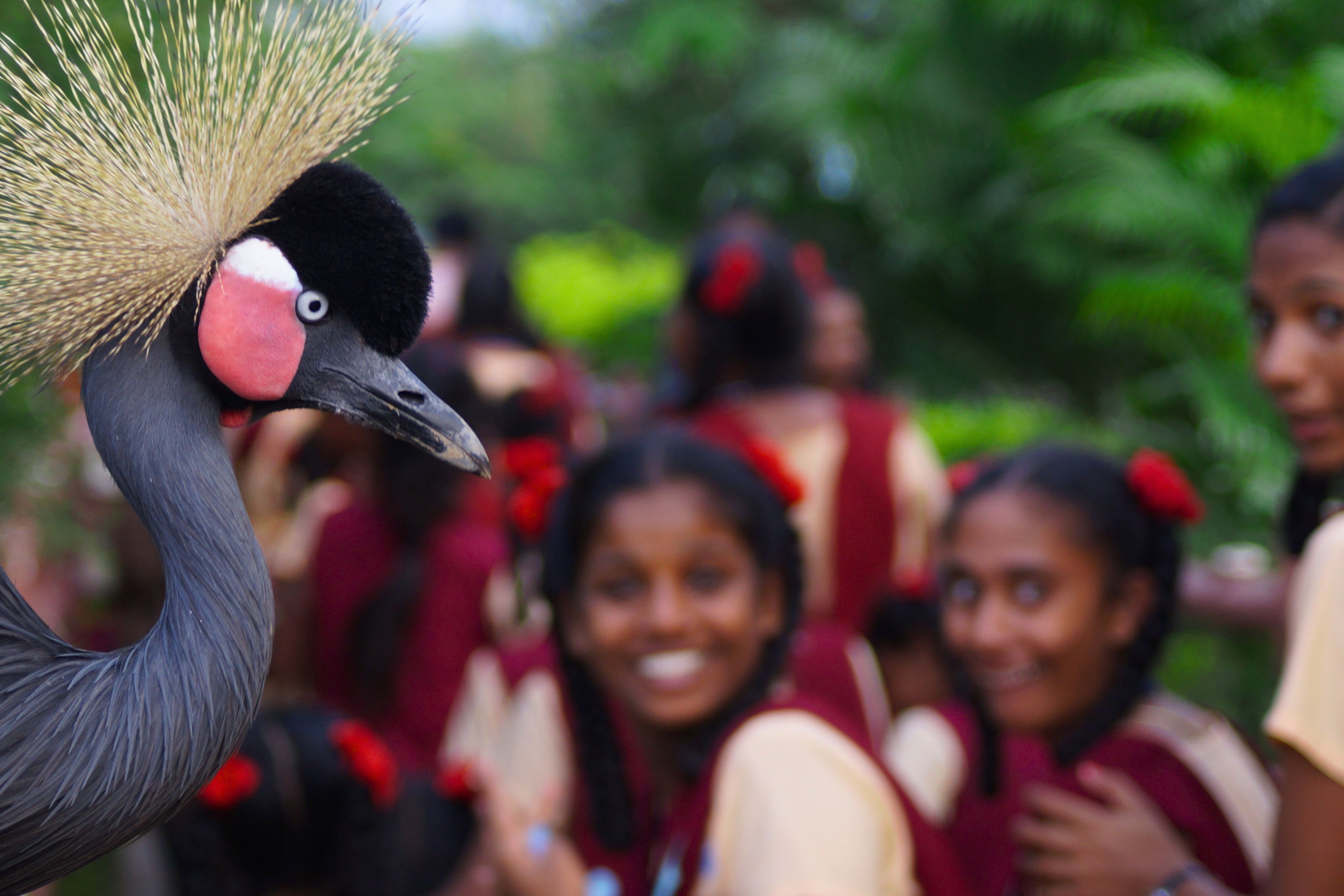
During Wildlife Week and Zoo Week, a 10-member volunteer corps guided thousands of visitors, translating complex conservation concepts into accessible stories.
The Team Behind the Education Initiatives
SPZP’s education and outreach initiatives are led by Dr. Shashikant Sharma (Education Officer), supported by two Education Assistants and Volunteers, who help coordinate visitor engagement, educational programming, internships, conservation campaigns, guided experiences, and public awareness activities.
Their work extends far beyond the zoo experience — connecting visitors with wildlife through interpretation, mentoring students and interns, developing conservation education programs, organizing awareness campaigns, and fostering meaningful community engagement with nature.
The Ripple Effect
Every intern trained, every child inspired, every visitor engaged creates a ripple:
- Veterinary students become wildlife practitioners across India
- Zoology graduates pursue conservation careers
- Families return home with newfound respect for nature
- Communities advocate for coexistence with wildlife
Looking Ahead: Expanding the Impact
SPZP is launching:
- Junior Ranger Programs for children ages 7-12
- Teacher training workshops for school educators
- Virtual internship opportunities for remote learners
- Conservation film screenings and speaker series
Join the Movement
Whether you're a student seeking hands-on experience, a teacher planning a field trip, or a community member passionate about wildlife — SPZP has a place for you.
Contact us to learn about internship opportunities, volunteer programs, and educational resources.
Together, we're not just visiting a zoo — we're building a conservation movement.